In the food processing industry, hygiene is not just a requirement—it is the foundation of safe and reliable production. Every surface, component, and machine that comes in contact with food must meet strict quality and sanitation standards. This is why stainless steel equipment has become the industry’s top choice for manufacturing plants across the world. From mixing and grinding to conveying and packaging, stainless steel machinery ensures safety, cleanliness, and compliance at every stage of food processing. Let’s explore why stainless steel is the preferred material for hygienic food production and how it supports GMP (Good Manufacturing Practices).
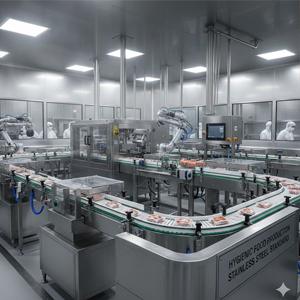
1. Corrosion Resistance: Long-Term Protection Against Contamination
Stainless steel is naturally resistant to rust, corrosion, and chemical reactions. In food plants where machinery is exposed to moisture, salts, acids, spices, cleaning agents, and temperature variations, corrosion resistance is crucial.
Benefits
- Prevents contamination from rust particles
- Supports regular washdowns and chemical sanitization
- Extends the life of equipment
- Ensures consistent product quality
Grades like SS 304 and SS 316 are widely used due to their strong corrosion resistance and food-safety properties.
2. Smooth, Non-Porous Surfaces Enhance Hygiene
One of the biggest advantages of stainless steel is its smooth, bacteria-resistant surface. Unlike mild steel or plastics, stainless steel does not trap food particles, oils, or microorganisms.
Why This Matters
- No cracks or pores for bacterial growth
- Easy and fast cleaning
- Reduces contamination risks
- Meets global sanitation requirements
This makes stainless steel the backbone of modern food hygiene machines.
3. Compliant With GMP, FDA, and International Hygiene Standards
Food factories must follow strict regulatory norms to meet safety and export requirements. Stainless steel equipment fits all major global compliance standards.
Stainless Steel Machinery Supports:
- GMP (Good Manufacturing Practices)
- HACCP (Hazard Analysis and Critical Control Points)
- FDA guidelines (for export units)
- ISO and CE standards
Using stainless steel provides manufacturers with confidence that their operations remain compliant during audits and inspections.
4. High Durability & Strength for Heavy-Duty Processing
Food processing involves grinding, mixing, heating, cooling, conveying, and continuous operation. Stainless steel is strong enough to handle high pressure, vibrations, and impact without deforming.
Key Advantages
- Long operational life
- Low maintenance
- Withstands heavy loads
- Suitable for high-speed automation lines
This makes stainless steel ideal for machinery used in meat processing, dairy, retort systems, CIP units, conveyors, and more.
5. Temperature & Chemical Resistance
Food processing often involves extreme temperature conditions—boiling, steaming, chilling, freezing, etc. Stainless steel does not react to these fluctuations.
Why This Is Important
- Maintains structural integrity
- Prevents chemical reactions with food ingredients
- Safe for acidic, salty, and alkaline products
- Supports hot water and steam sterilization
This is why SS machinery is used in pasteurization, cooking kettles, reactors, fermenters, and processing tanks.
6. Easy to Clean and Sanitize (CIP/SIP Friendly)
Hygiene is a continuous process in food factories. Stainless steel supports CIP (Clean-in-Place) and SIP (Sterilize-in-Place) systems, reducing manual labor and downtime.
Advantages of CIP-Friendly SS Equipment
- Faster sanitation cycles
- Less water and detergent consumption
- Minimal production interruption
- Reduced risk of human contamination
This ensures consistent hygiene and efficiency in high-demand processing environments.
7. Supports Custom Fabrication for Food-Safe Designs
Manufacturers like Shiva Engineers can design stainless steel machinery in any size or shape to meet a plant’s specific process flow.
Custom SS Design Benefits
- Reduced product stagnation
- Smoother material flow
- Better operator safety
- Optimized plant layout
- Tailor-made to product category
From mixers and blenders to conveyors, vessels, and storage tanks—stainless steel supports complete customization.
Conclusion
Stainless steel machinery plays an essential role in ensuring hygienic, safe, and compliant food production. Its durability, corrosion resistance, smooth surface, and compatibility with GMP make it the best choice for modern manufacturing plants.
By investing in high-quality stainless steel equipment, food processors can guarantee product safety, improve plant hygiene, and extend machinery life—helping the business remain competitive and audit-ready.

We are one of the leading Food Processor Machinery manufacturers and exporters. Machine Manufacturer and Exporter for more than 25 years